Brands Are at It Again Image
You get the sense that luxury mode characterization Burberry very much regrets its decision to burn $38 million of unsold stock rather than allow it fall into the incorrect hands.
It was embarrassing. The Burberry burn down — #burnberry on social media — broke as a huge story in July, merely two months after the brand announced it was a cadre signatory to Making Fashion Circular , an initiative aiming to design waste out of mode and keep resources in circulation. When you cremate wearing apparel, that's obviously not going to happen. The materials are lost. Information technology's the antithesis of the circular economy.
The company moved to stem the fierce criticism and this calendar month announced information technology would immediately cease incinerating clothes. Only the backlash shined some light on the practise of destroying style. Burberry had non tried to hibernate its use of incineration, which was listed in its 2017/2018 annual report under "finished goods physically destroyed during the twelvemonth." Only most brands don't talk publicly about the practice, which they have no obligation to disclose.
And so why do they do information technology? Virtually often, the reason is to avert devaluing the brand; at that place is a terror of what discounting would practise to prestige. Some brands, such as Chanel, never disbelieve. The idea is, continue information technology scarce and y'all keep it exclusive.
Over the last ii years, Cartier owner Richemont, for example, has bought back almost $575 one thousand thousand worth of watches from retail partners to avert having the timepieces sold more than cheaply on the gray market of unauthorized retailers. Nigh were destroyed, and the parts were recycled.

Pierre Albouy / Reuters
It's not merely high-end brands that are destroying their stock. Fast way is at information technology too. In 2017 information technology was revealed that fashion behemoth H&Grand — which has made much of its light-green agenda with recycling points in stores and what it calls a Conscious Collection — burned about 19 tons of obsolete wear (the equivalent to 50,000 pairs of jeans) in a waste matter-to-energy facility run past 1 of Sweden's energy giants, Mälarenergi.
H&G said that the clothes were unsellable for safety reasons — for example, they didn't meet restrictions on chemicals or had been damaged by mold. The company used the same defence over again this month subsequently the German current affairs program "Frontal 21" dedicated a evidence to an investigation into the burning of unsold H&M stock in Deutschland, alleging that the brand destroyed 100,000 pieces of clothing unsold from multiple seasons.
And Nike was the subject of a New York Times article in 2017 that alleged the company slashed wearable and shoes to render them unwearable before disposing of them.
Public outcry over the destruction of fashion overstock shows that these methods of disposal deport an unofficial public approval rating close to nada. To input all the resources, emit so much pollution and waste and then destroy those apparel is pure madness, given the ecological emergencies nosotros confront.
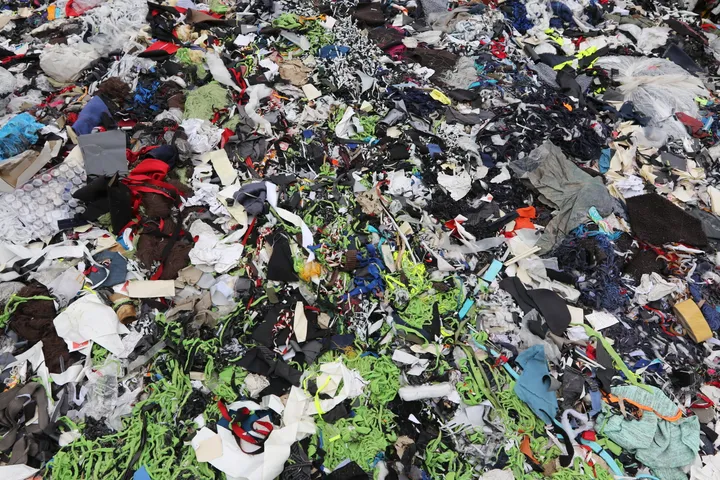
Waste matter and fashion go hand in glove. The industry continues to pump out a swelling inventory; each year, northward of 100 billion new garments from virgin fibers are pushed onto the market. H&G alone was reported in March to have $iv.3 billion worth of unsold clothes.
The energy needs of fashion are incredible. More often than not — specially in fast style — these demands are shouldered by developing economies with scant or patchy energy cover. A Cambodian manufacturing plant producing garments for export, for example, needs power to iron and dye clothes. The French ecology organization Geres estimated that garment factories in Phnom Penh burn through 2.three million cubic feet of forest every calendar month. To feed forest-fired boilers, factories are clearing old-growth forests.
Then there are the emissions. The style industry pumps out more carbon dioxide than international flights and shipping combined, according to a 2017 Ellen MacArthur Foundation report.
Palash Khan via Getty Images
There are moves to change the do of destroying mode overstock, although few address the issue in whatsoever systematic way. An insider from the luxury goods sector who wished to remain anonymous said that the days of luxury design houses' incineration of substantive collections that have failed to sell is probably gone. "Instead, there's a cascade. Unsold stock is put through outlets, or garments and accessories disassembled and used in different ways. For example, the hardware similar the zips and buttons can exist removed. Incineration is the concluding resort."
When it comes to this pour, luxury goods brands have more options and more leverage than fast fashion brands. There are arguably more than opportunities to reclaim their products and re-enter them in the supply chain. But fast fashion brands, already at low price and high volume, shouldn't expect to be invited into discount luxury outlets someday presently.
Considering fast fashion makes upwards the panthera leo's share of the average wardrobe and is bought and discarded quickly, when nosotros talk about today's out-of-kilter fashion consumption and disposal, nosotros are actually talking almost this market.
Many people look to article of clothing recycling as a more acceptable and promising style of managing our fashion waste. Sure, there is vast potential; that is a given when the entry point is runaway consumption and resource use. But anybody who thinks we can miraculously scale up way recycling to counteract overproduction is verging on the delusional.
At that place is progress being fabricated in the pursuit of recycled fiber. Y ou might have noticed a big increase in the amount of fashion on the marketplace fabricated of yarn from recycled waste fishing nets, for instance.

Digital First Media / Orange County Register via Getty Images
Only this is still mostly tinkering around the edges. What'due south important to understand: It'south not exciting innovation that volition make recycling viable but dull old legal curbs on retailers, manufacturers and distributors. Hither, French republic leads the way.
Regulation there now means that mode producers must accept responsibility for the cease of life of the wear they put on the French marketplace, usually through participation in collecting and recycling programs. Other French initiatives are trying to limit the corporeality of different sorts of fibers that fashion producers may place on the French marketplace. Complication is the enemy of all recycling schemes.
But this French revolution is an anomaly. Elsewhere, including the U.Southward., at that place seems to exist little appetite to adjourn the unsustainable habits of brands and get them to take real responsibility. The fact is that with a global fashion inventory this huge, even with an injection of skilful ideas and innovation, recycling will never triumph.
This brings u.s.a. to a hard decision as consumers. We hate incineration and destruction generally, but we're continuing to prop up the depression-cost, high-volume system that makes it an inevitability. Information technology's estimated that nosotros buy nearly 60 percent more clothes annually than we did in 2000 and wear each detail less earlier ditching it. Per capita, Americans send about 70 pounds of textiles a year to landfills. When are nosotros going to wait at our own consumption habits and need that fashion brands produce fewer clothes?
For more content and to be part of the "This New World" community, follow our Facebook page. HuffPost's "This New World" series is funded by Partners for a New Economy and the Kendeda Fund. All content is editorially independent, with no influence or input from the foundations. If you have an idea or tip for the editorial series, send an email to thisnewworld@huffpost.com
Source: https://www.huffpost.com/entry/burberry-burn-clothes-fashion-industry-waste_n_5bad1ef2e4b09d41eb9f7bb0
0 Response to "Brands Are at It Again Image"
Post a Comment